Essays · 6 min read ·
Can Colleges Tell If You Used AI on Your Essay?
Can colleges detect AI-written essays? What AI detectors can and can't do, what the Common App and colleges say about AI, and how to use AI help safely.
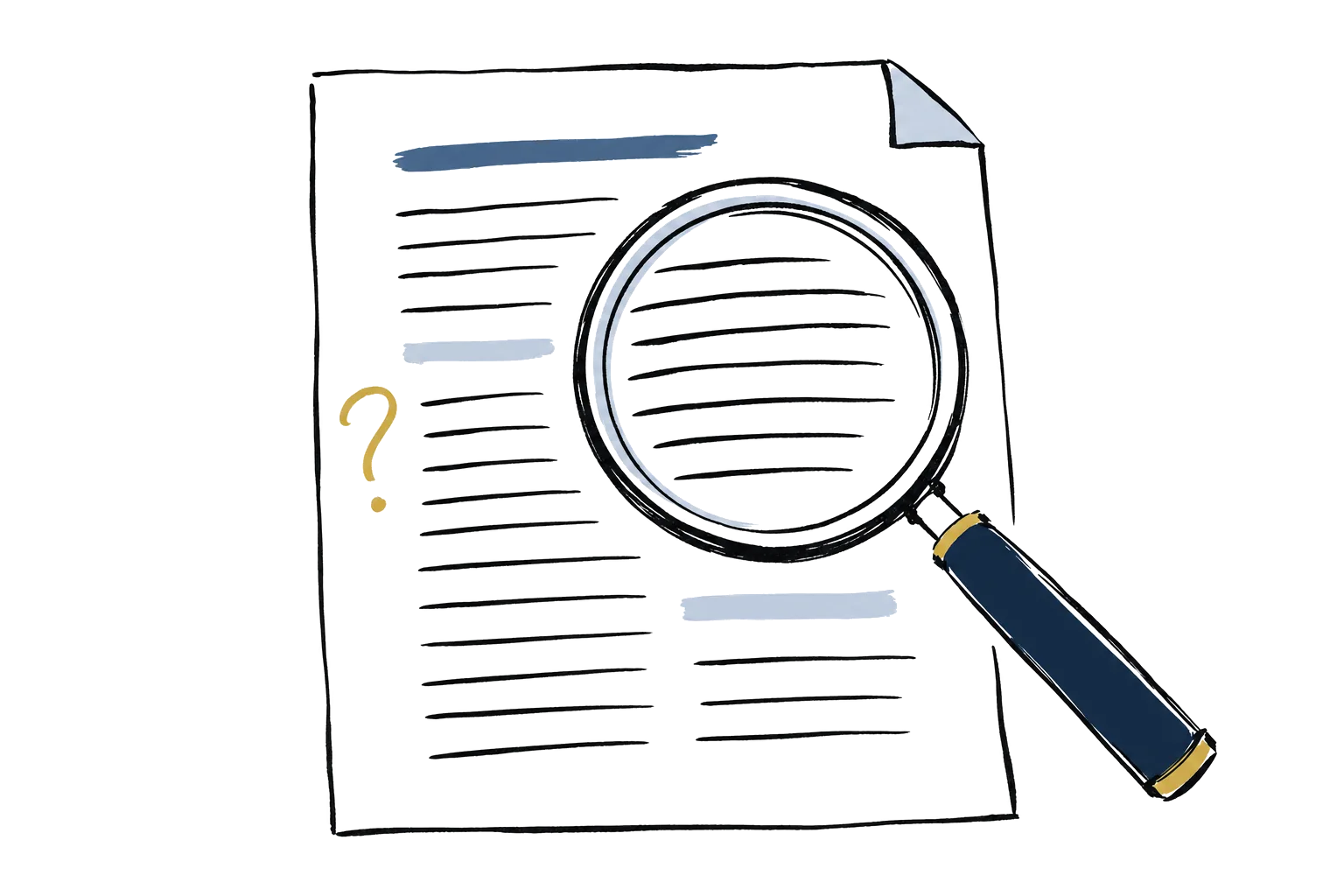
Can colleges tell if you used AI on your essay? Not reliably with software: AI detectors miss machine-written text and sometimes flag human writing. But that's the wrong question. AI-written essays tend to read as generic, admissions policies treat AI-generated writing as misrepresentation, and the safe ways to use AI are easy to stay within.
How well do AI detectors work?
Not very. Detectors guess whether text is machine-written from statistical patterns, and the results are shaky:
- False negatives. Light editing of AI text often gets it past a detector.
- False positives. Plain, careful human writing, including writing by non-native English speakers, can be flagged as AI.
- Even AI companies struggle. OpenAI shut down its own AI-text classifier in 2023, citing its low accuracy.
Because the tools are this uncertain, a detector score alone is weak evidence. That doesn't make AI-written essays safe; it means the real risks are elsewhere.
What readers notice instead
Admissions readers aren't running forensics. They're reading closely, and a few things stand out:
- Generic voice. Abstract claims, grand vocabulary and a tidy moral at the end of every paragraph. See how to use AI without sounding like AI for what that looks like.
- A mismatch with the rest of the file. An essay that sounds nothing like your short answers, your activities descriptions or what your teachers say about you.
- Details that don't hold together. AI can invent specifics that clash with the rest of the application.
Even if nobody suspects AI, an essay that sounds like everyone else's has already failed at its one job: showing a reader who you are.
What the Common App and colleges say
The Common App's fraud policy treats submitting the substantive content or output of an artificial intelligence platform as your own work as misrepresentation, alongside plagiarism. Many colleges have their own statements too. Some allow AI for brainstorming or grammar and ban it for drafting; a few ask you to affirm that the work is entirely your own.
Policies change, so check two places before you submit: the Common App's current policy and the admissions site of each school on your list. If a college asks you to certify that you wrote the essay, that's the standard to meet.
Safe ways to use AI on your essay
| Generally fine | Not fine |
|---|---|
| Brainstorming questions about your life | Submitting AI-written sentences or paragraphs |
| Feedback on a draft you wrote | Having AI "rewrite it to sound better" |
| Checking you answered the prompt | Inventing experiences or details |
| Catching typos and repeated words | Translating an AI draft into "your voice" |
The principle is simple: AI can comment on your writing; it shouldn't produce it. That's how Admit Coach works. The essay grader scores your draft and quotes your own lines as evidence, and the coach suggests one small edit at a time, from your words, that you choose to accept. It won't write your essay.
Keep proof that the essay is yours
The simplest protection is a paper trail:
- Draft in a tool with version history (Google Docs, or Admit Coach, which saves versions of every essay).
- Keep your brainstorm notes. Lists of memories and outlines show where the essay came from.
- Be ready to talk about it. If an interviewer asks about your essay, you should be able to tell the story in more detail than the page holds.
Then get honest feedback the safe way: paste your draft into the free college essay grader, or pick your school's prompts in a school essay grader.
Frequently asked questions
Some may, but practices vary and few colleges publish them. AI detectors are known to be unreliable: they miss AI text and sometimes flag human writing. Readers are more likely to notice an essay that sounds generic or doesn't match the rest of the application.
Getting feedback, brainstorming help or grammar checks is generally treated like help from a teacher. Submitting AI-generated writing as your own is not: the Common App's fraud policy covers substantive content produced by an AI platform. Individual colleges can be stricter, so read their policies.
Colleges can act on misrepresentation in an application, including after admission. Submitting writing you didn't write is the kind of thing that falls under those policies. Using AI for feedback and writing every sentence yourself keeps you on safe ground.
Keep your drafts. Version history in Google Docs or an editor with saved versions shows how the essay developed over time. Admit Coach keeps a version history of every essay in your account for the same reason.
Get honest feedback on your essay
Six scores against an admissions rubric, quotes from your draft as evidence, and the one fix to make next. Free, no account needed.
Keep reading
Essays · 6 min read
AI vs Human College Essay Review: Which Should You Use?
AI review is instant, consistent and cheap. A good human reader knows you and catches what a model can't. The strongest essays usually get both, at different stages.
Essays · 7 min read
How AI College Essay Graders Work (and What They Can't Do)
An AI essay grader is a language model plus a rubric, rules and checks. Here's what happens when you paste a draft, why some tools give you a different grade every time, and what no grader can tell you.

Essays · 7 min read
How to Use AI on Your College Essay Without Sounding Like AI
Use AI for feedback, questions and brainstorming, and keep every sentence your own. Here's what AI writing sounds like, why readers notice, and a process that keeps your voice.