Essays · 7 min read ·
How AI College Essay Graders Work (and What They Can't Do)
How AI college essay graders work: what a rubric-based grader reads, how scores and evidence are produced, why chatbot grades drift, and their limits.
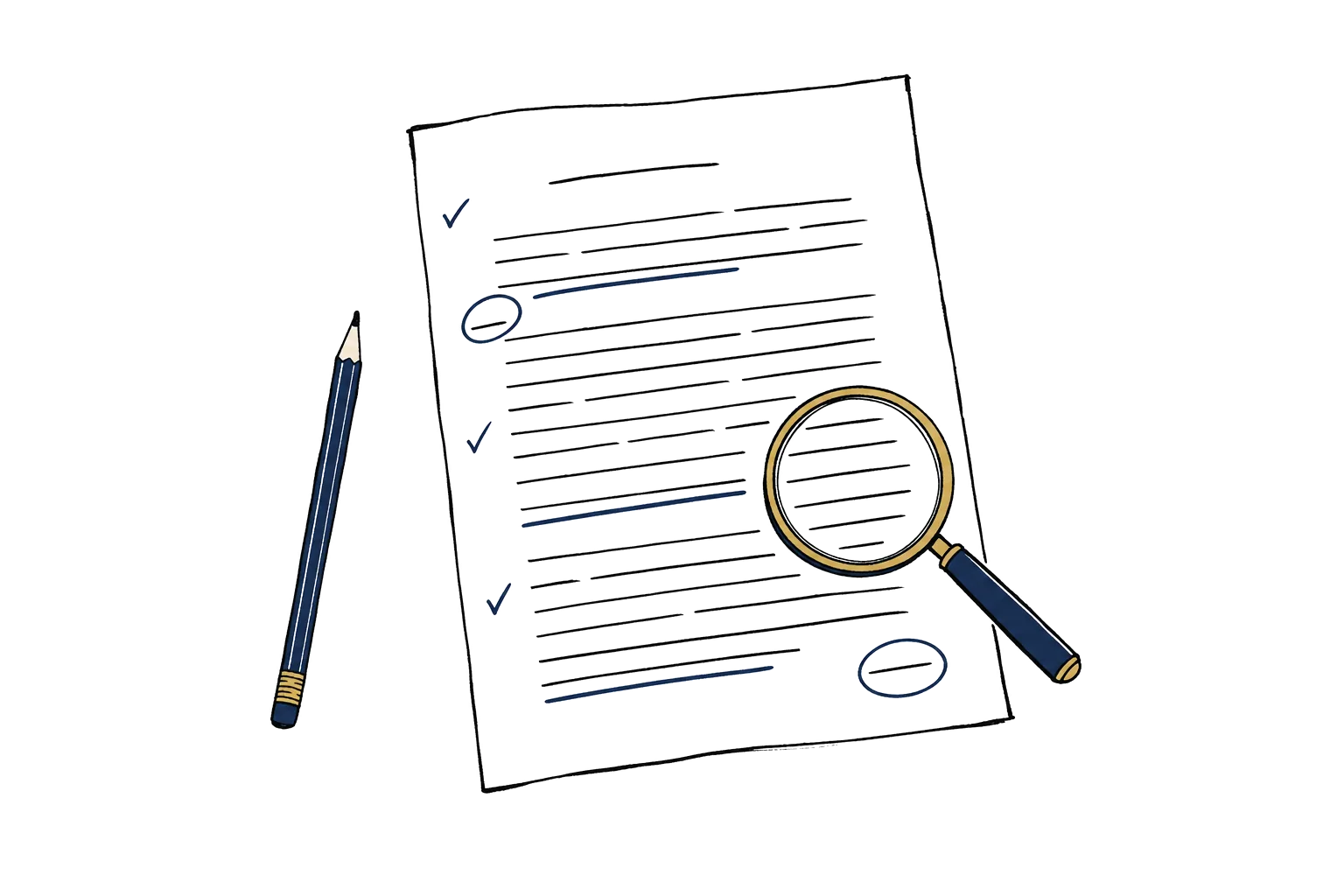
An AI college essay grader is a large language model plus a rubric, a set of rules and some checking code. You paste a draft, the model reads it against fixed criteria, and the software turns what it finds into scores, evidence and a next step. The quality of the feedback depends far more on the rubric and the checks than on the model.
Here's what actually happens when you press "grade," why some tools give you a different grade every time, and what no grader can tell you.
What an AI essay grader actually reads
Every grader starts from the same three inputs:
- Your essay. Most graders need a minimum length. Ours needs at least 50 words, because there's too little to judge below that.
- The prompt, if you give one. A "Why us" answer should be read differently from a personal statement. Graders that know the exact question, like our school-specific essay graders, can check whether you answered it.
- A rubric. This is the list of things the grader scores. It's the part that matters most.
The model reads all three together. It isn't checking grammar line by line like a spellchecker; it's reading the essay the way a person skims a stack of them, looking for an opening that earns attention, a clear idea, specific detail and a sense of who wrote it.
The rubric: what gets scored
Admissions offices don't publish a single scoring sheet, but readers describe the same things again and again. Our free essay grader scores six of them from 1 to 5:
| Dimension | The question it asks |
|---|---|
| Hook | Does the opening make a reader want the next line? |
| Theme | Is there one clear idea the essay is about? |
| Detail | Are there specific moments, names and objects, not summaries? |
| Authenticity | Does it sound like a real student, in their own voice? |
| Reflection | Does it show how the writer thinks and what changed? |
| Writing | Is it clear, tight and correct? |
A fixed rubric does two jobs. It keeps the grader focused on what readers care about, and it makes scores comparable: a 3 on reflection in your first draft means the same thing as a 3 in your fifth.
Evidence: why every score should quote your essay
A number on its own isn't feedback. "Detail: 2" tells you nothing until you know which paragraph lost the point. Good graders ask the model to quote the lines that earned each score.
Quotes also keep the model honest. Language models sometimes invent things, including quotes that aren't in your essay. So after the model answers, Admit Coach checks every quote against your text and drops any that don't match, and it caps a score that's left without evidence. The overall score and your weakest dimension are calculated by code from the individual scores, not guessed by the model.
Why chatbots give a different grade every time
If you've pasted the same essay into a chatbot twice, you may have seen a B+ turn into an A-. Two things cause that:
- Randomness. Language models pick each word with some probability, so two runs rarely match exactly.
- No fixed standard. Without a rubric, each run decides on its own what "good" means, and a slight change in how you ask shifts the answer.
Grades that drift make revision guesswork: you can't tell whether a change helped or the dice just rolled differently. Purpose-built graders fix the rubric, keep the instructions constant and store results, so the same draft gets the same score and a new score means the essay changed. Our Admit Coach vs ChatGPT page goes deeper into the differences.
What an AI grader can't tell you
Be clear-eyed about the limits:
- It can't predict admission. Readers see your essay alongside grades, activities, recommendations and whatever their college needs that year. A 4.5 doesn't mean "admit."
- It doesn't know your story. A grader can say a moment feels thin; only you know what really happened and what it meant.
- It isn't a school's own reader. No outside tool is trained on a college's internal decisions. Be wary of anyone claiming otherwise.
- It shouldn't write for you. Feedback is the safe, useful part of AI. Generated sentences are where your voice disappears and where colleges' AI policies come in. See how to use AI without sounding like AI.
How to get the most out of an essay grader
- Finish a full draft first. Graders judge structure and reflection, which don't exist in half an essay.
- Paste the exact prompt. For supplements, use the school's essay grader or copy the prompt in, so it can check you answered the question.
- Fix the weakest dimension only. Make the one change suggested, then grade again. Changing everything at once hides what worked.
- Read the quotes, not just the numbers. They show you where a reader's attention rises and falls.
- Get a human read before you submit. A teacher, counselor or friend who knows you can catch what no model can. Here's how AI and human review compare.
Ready to try it? Paste a draft into the free college essay grader: six scores, quotes as evidence and the one fix to make next, with no account needed.
Frequently asked questions
A good one gives a large language model your essay, the prompt and a fixed rubric, and asks for a score on each rubric dimension along with quotes from your essay that justify it. The software then checks the output, for example by confirming every quote actually appears in your draft, and calculates the overall score itself.
They're useful for spotting patterns that readers also notice: a slow opening, summary instead of detail, little reflection. They can't predict an admissions decision, because readers weigh your essay alongside grades, activities, recommendations and what their school needs that year. Treat a score as feedback on the draft, not a forecast.
Chatbots generate text with some randomness, and without a fixed rubric each run decides on its own what to weigh. Small wording changes in your request also shift the result. Graders built for essays fix the rubric and store results so the same draft gets the same score.
It depends on the tool, so read its privacy policy. Admit Coach's free grader doesn't save what you paste, and essays in an account are private to you and never used to train AI models.
Get honest feedback on your essay
Six scores against an admissions rubric, quotes from your draft as evidence, and the one fix to make next. Free, no account needed.
Keep reading
Essays · 6 min read
AI vs Human College Essay Review: Which Should You Use?
AI review is instant, consistent and cheap. A good human reader knows you and catches what a model can't. The strongest essays usually get both, at different stages.

Essays · 6 min read
Can Colleges Tell If You Used AI on Your Essay?
AI detectors are unreliable, but that isn't the point. AI-written essays tend to read as generic, policies treat them as misrepresentation, and the safe uses of AI are easy to stay within.

Essays · 7 min read
How to Use AI on Your College Essay Without Sounding Like AI
Use AI for feedback, questions and brainstorming, and keep every sentence your own. Here's what AI writing sounds like, why readers notice, and a process that keeps your voice.